
HomeTrainer
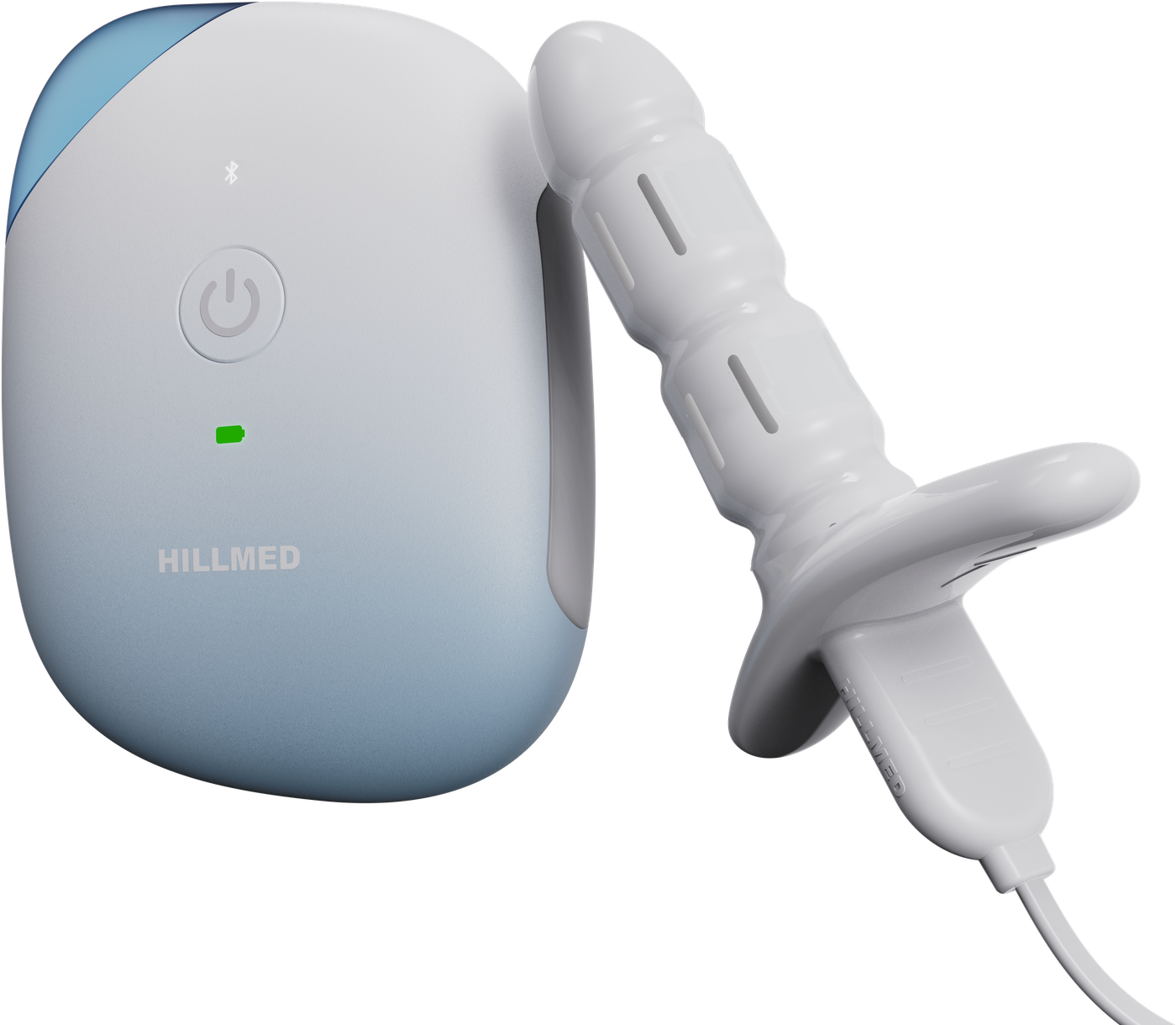
HomeTrainer is a wireless biofeedback system for pelvic floor muscle training at home. It is being designed to show the user, and their clinician, whether the pelvic floor muscles are doing the work.
A pelvic health clinician, such as a pelvic floor physical therapist, would prescribe it and set each user’s program.
In development. Not for sale. Not cleared or approved by the FDA or any other regulator.
Home training happens with nobody watching
In the clinic, the clinician watches each pelvic floor squeeze and checks that hip, buttock, thigh or belly muscles are not doing the work instead. Clinicians call this muscle substitution.
At home, the user trains between visits and nobody checks. A squeeze driven by other muscles also raises the reading from a sensor inside the body. A display that shows only that sensor counts it as a pelvic floor squeeze.
In a 1991 study by Bump and colleagues, 49% of 47 women did an ideal pelvic floor squeeze after brief spoken instructions. Another 26% used a technique that could make leakage worse.

One recording unit, 8 channels
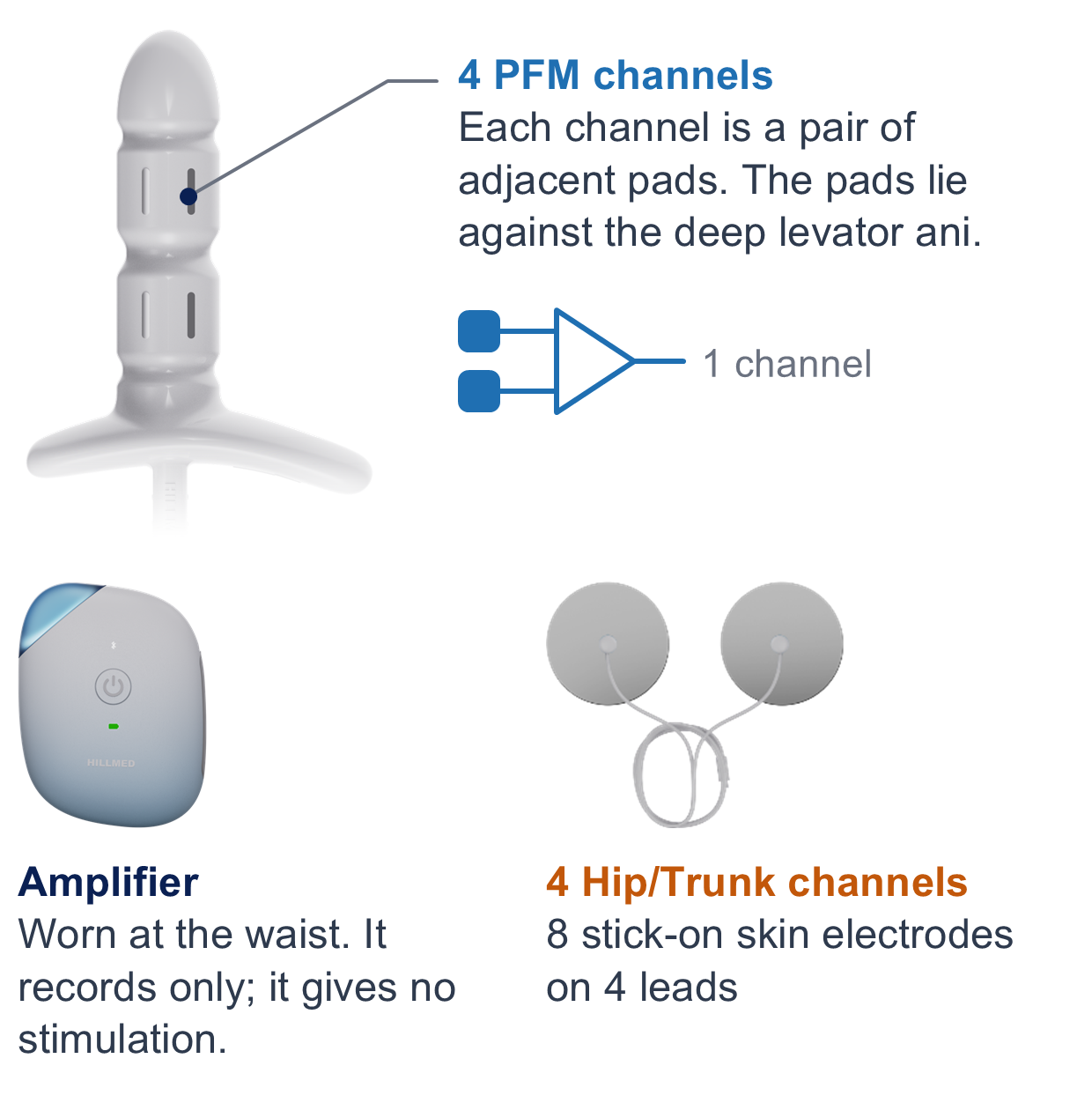
HomeTrainer records 8 muscle signals, called channels, at the same time.
- 4 pelvic floor channels. A small vaginal probe has pairs of sensors that rest against the deep pelvic floor muscles. Each pair gives one channel.
- 4 hip and trunk channels. 8 stick-on skin sensors, in 4 pairs, go on the hip, buttock, thigh or belly muscles that the clinician chooses.
- The recording unit is worn at the waist. It only records. It sends no electrical current into the body.
From the sensors to the clinician
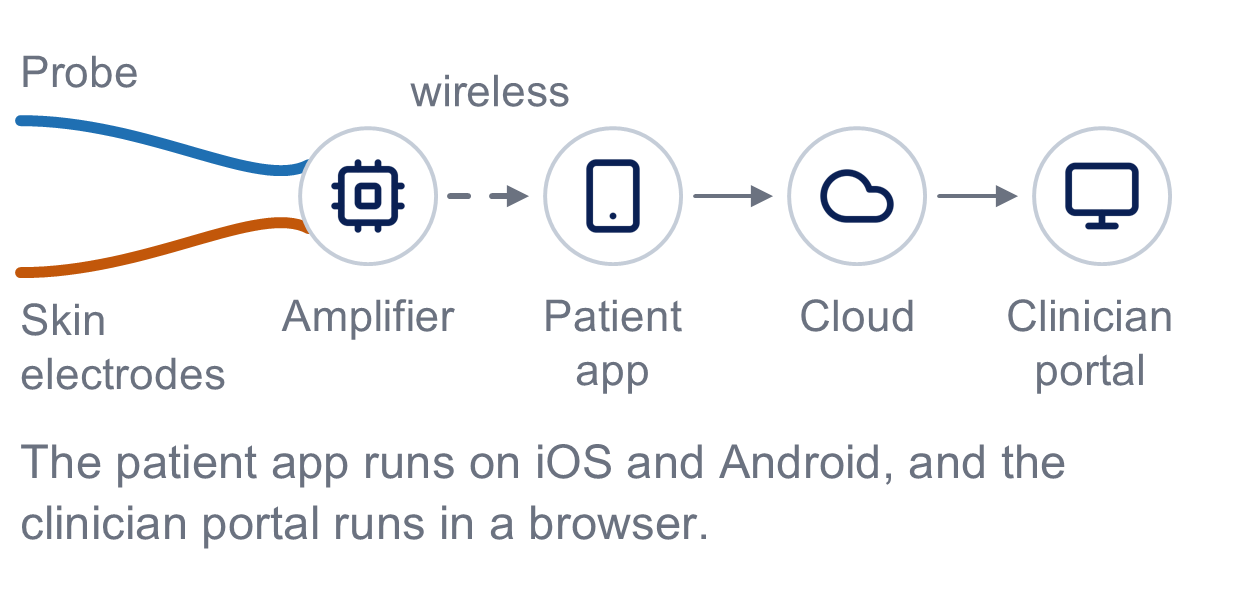
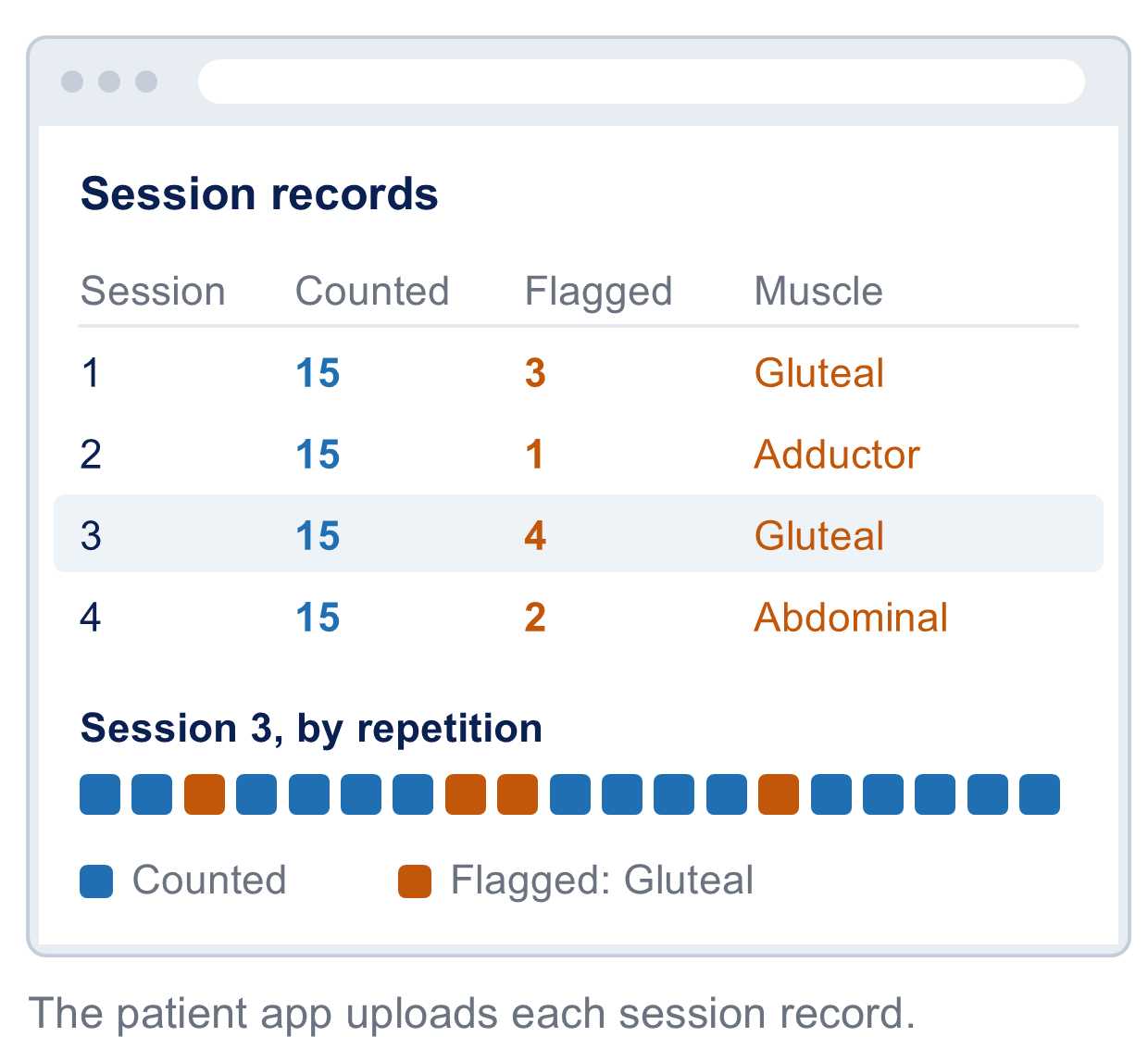
The recording unit sends the signals wirelessly to the patient app on an iPhone or Android phone. The app uploads each session record to a secure server. The clinician sees the records in a web portal.
Two ways to train
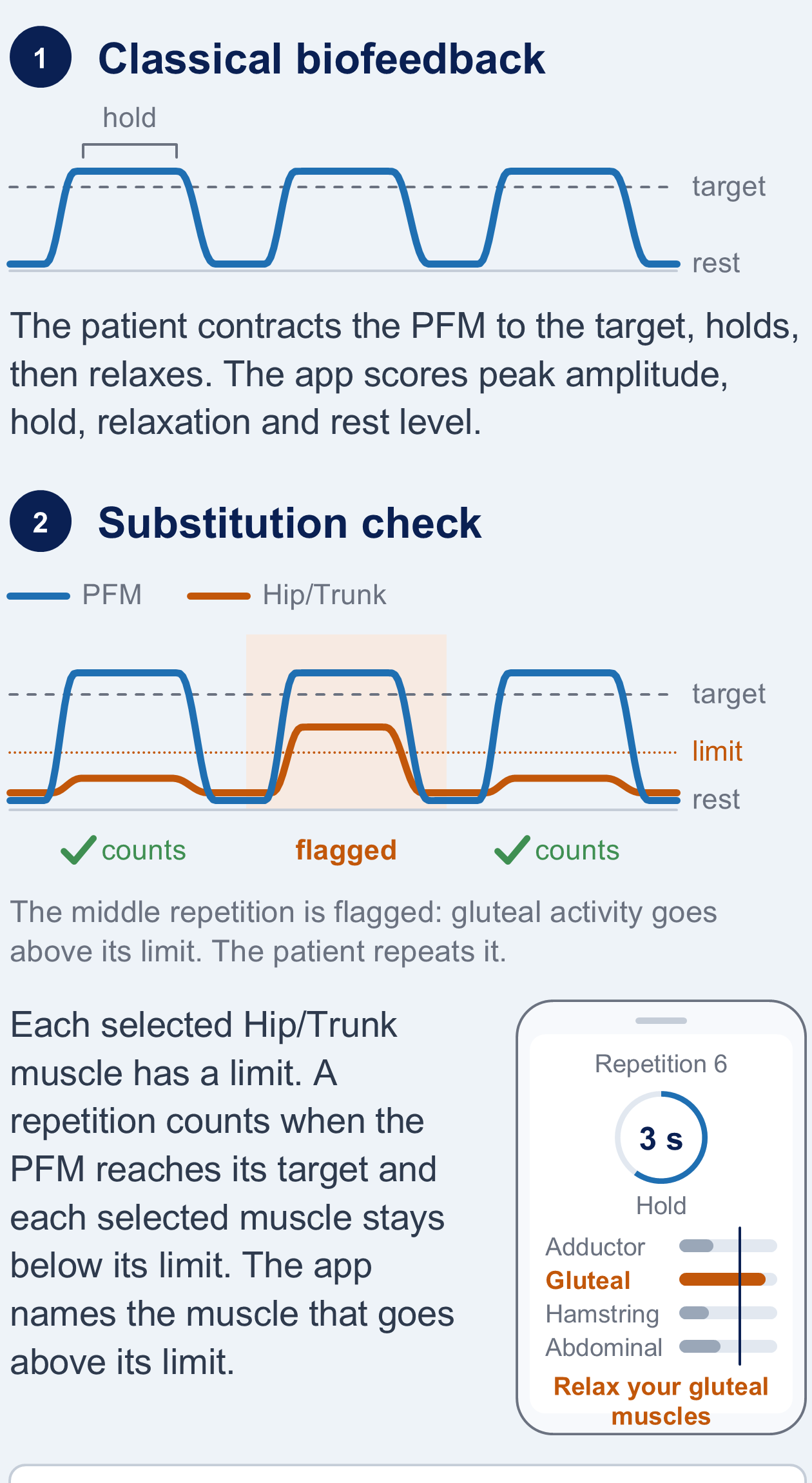
1. Classic biofeedback
The user squeezes the pelvic floor up to a target, holds, and relaxes back to rest. The app scores each repetition on how high the squeeze goes, how long it is held, how well the muscles relax, and the resting level.
2. Substitution check
The app also watches the hip and trunk muscles the clinician chose. Each one has a limit. A repetition counts only when the pelvic floor reaches its target and the other muscles stay below their limits. If a muscle goes over its limit, the app names it, for example “Relax your gluteal muscles”, and the user repeats the repetition.
At the start of each session, the app records a calibration squeeze. The clinician sets each target and limit as a percent of it.
The clinician sets and reviews the program
- Clinic. In the portal, the clinician chooses the training mode, the muscles to watch, the hold time, the number of repetitions and how often to train. The clinician supervises the first session.
- Home. The user trains with the app on that program.
- Review. The clinician reviews each session, including repetitions that counted and repetitions flagged for substitution, and adjusts the program.
The planned kit
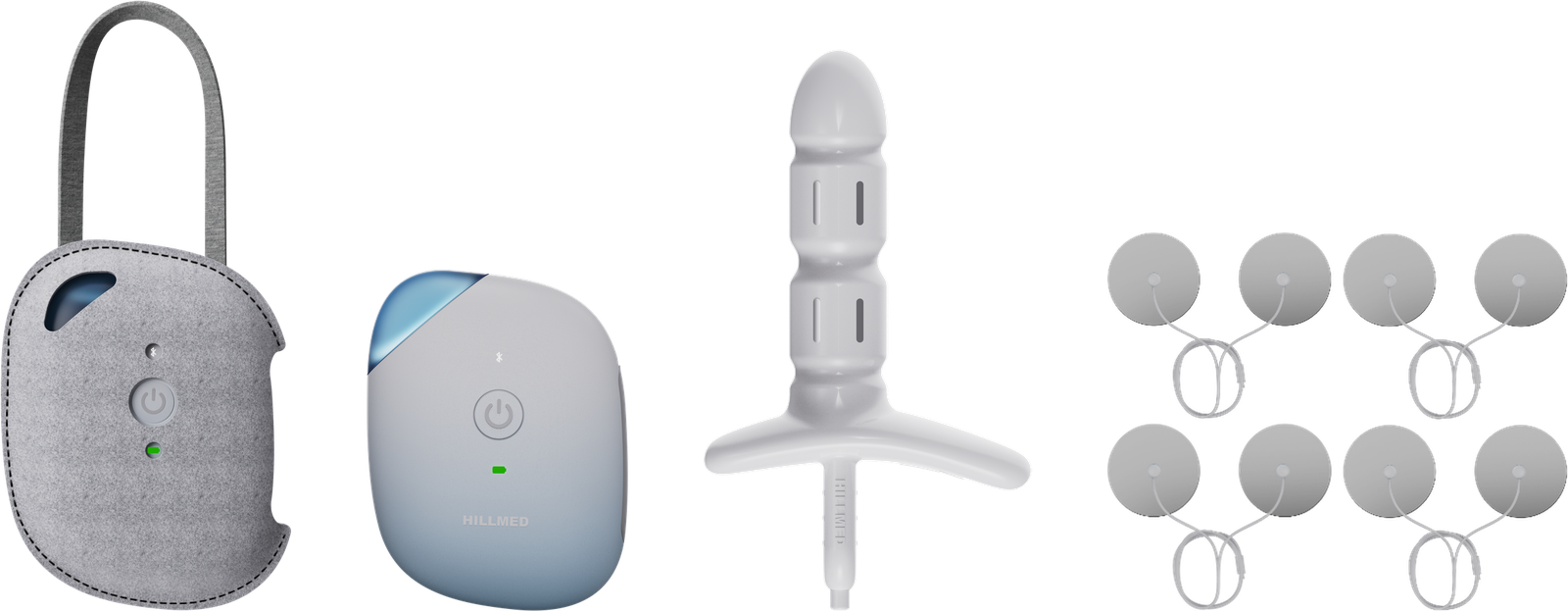
- A waist pouch
- The recording unit (about 10 hours per charge, charged over USB)
- A vaginal probe, about 1 inch (25 mm) wide and 3 inches (76 mm) long, reused by one person. The user cleans and disinfects it after each session.
- 4 skin sensor leads with 8 stick-on sensors
Planned use
HomeTrainer is being developed to measure and display the activity of the pelvic floor muscles and of hip, trunk and leg muscles at the same time, and to give biofeedback for pelvic floor muscle training at home under the direction of a clinician. It is being developed for adult women with pelvic floor muscle problems, such as urinary incontinence. It is not intended to diagnose any condition.
In development. Not for sale. Not cleared or approved by the FDA or any other regulator.
Stay in touch
Clinicians and researchers can join our interest list. We will contact you when a demonstration is ready, or if you would like to give feedback on the prototype.