Investigational Device. Limited by Federal (U.S.) Law to Investigational Use. This product has not been reviewed or approved by the FDA.
How our technology works
Muscles give off small electrical signals when they tighten and when they rest.
Our devices record these signals from many points at the same time. Software turns the signals into pictures that show which muscles are working, where, and how they work together.
Join the interest listIn development. Not for sale. Not cleared or approved by the FDA or any other regulator.

Sensors pick up muscle signals
Each sensor reads the signal under it. No needles are used. Three kinds of sensors are being developed.
Sensor grid
A flexible patch of 64 sensors on the skin over one muscle. It shows how activity spreads across that muscle.


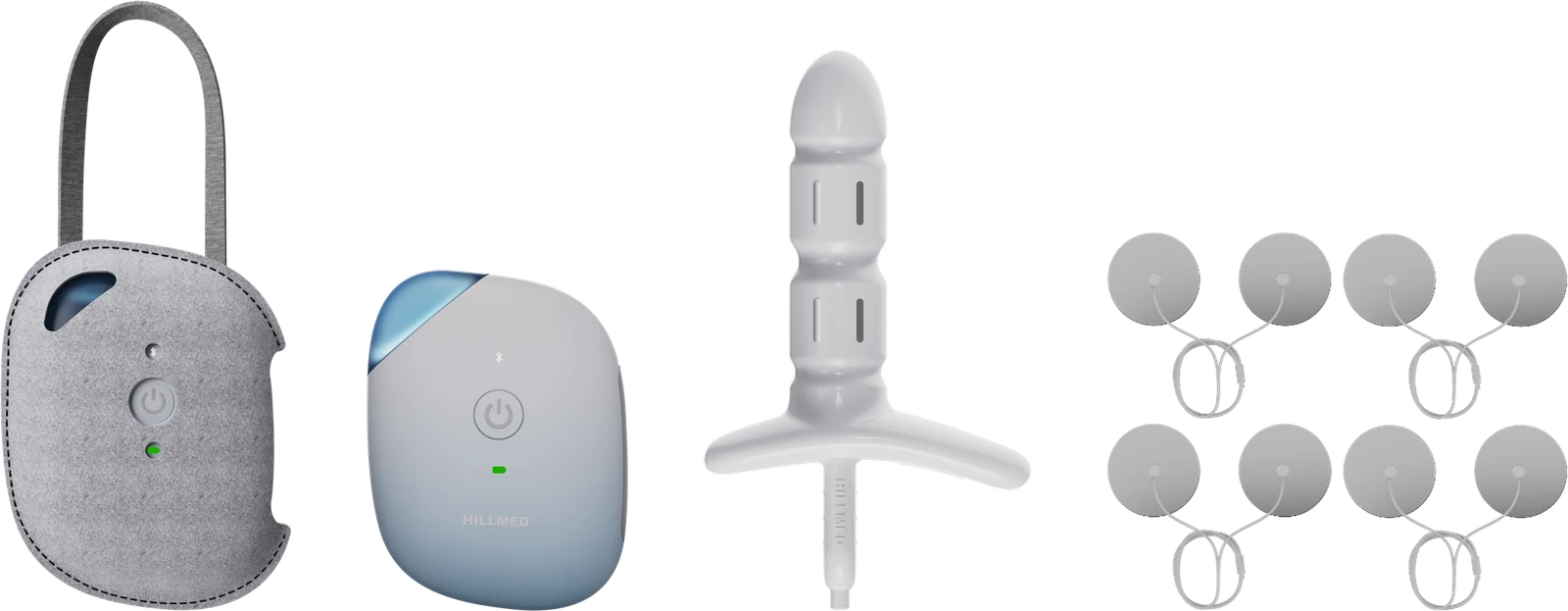
Pelvic floor probe
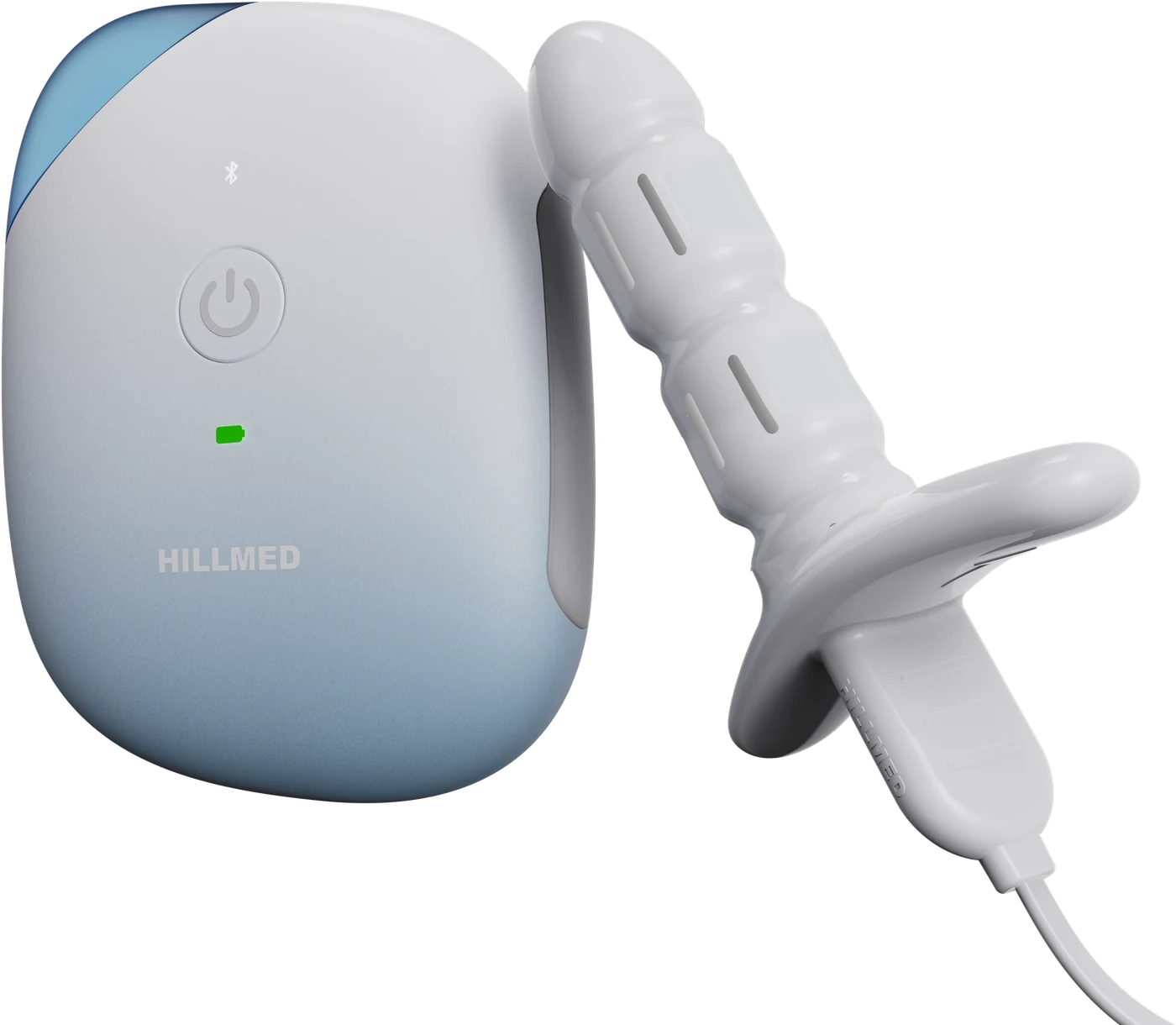
A small probe with sensors around it, placed in the vagina or rectum. It records the pelvic floor muscles from the inside.

Skin sensors
Stick-on sensors in pairs, one pair per muscle. They record nearby muscles such as the hip, buttock, thigh or belly.
Every channel records at once
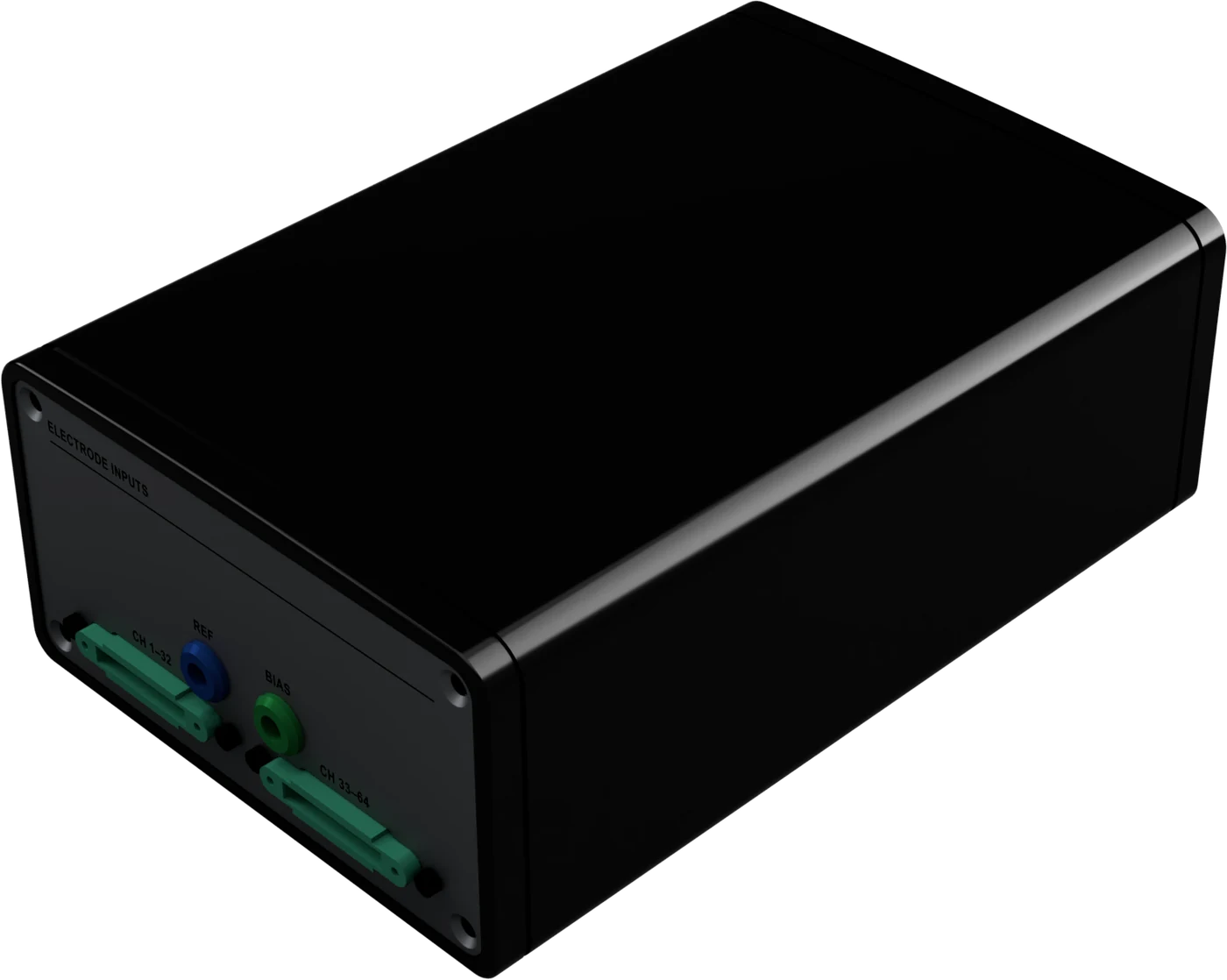
A small recording unit collects all signals on one clock. This lets the software compare muscles during the same squeeze, hold or exercise.
In this example, the pelvic floor squeezes three times and a hip muscle joins in on the middle squeeze.
Software turns signals into pictures
The software is being designed to produce three kinds of results from one recording.
Where a muscle is active
A color map shows which part of a muscle is working. With the probe, it shows the pelvic floor from front to back.
Single motor units
A motor unit is one nerve cell and the muscle fibers it controls. The software picks out single motor units and where their nerves join the muscle.
How muscles work together
The software measures how closely muscles work together and groups them into networks.
Two devices use this technology
In development. Not for sale. Not cleared or approved by the FDA or any other regulator.
HomeTrainer
8channels for pelvic floor muscle training at home.
The app is being designed to tell the user when another muscle is doing the work, and to share each session with the clinician.
About HomeTrainerThe 64-channel system
64channels for research on the pelvic floor, trunk and limbs, including stroke rehabilitation.
About the 64-channel system




Stay in touch
Join our interest list to hear about demonstrations and research studies.
Email ushello@hillmedgroup.com Join the interest list